
Rotary vs. Vibratory Rock Tumblers: Which Is Better?
If you’re starting your rock tumbling expedition, you’ll uncover that each type of tumbler offers distinct advantages that could make or break your success with varying materials.
Your choice between these two machines will impact everything from your processing time to the final shape of your stones, and the distinctions might surprise you.
Understanding the Basic Mechanics of Both Tumblers
Rock tumblers, the fascinating machines that transform rough stones into dazzling jewels, come in two distinct varieties: rotary and vibratory.

When you’re exploring rock tumbling, you’ll find that each type works quite differently to achieve its results. Rotary tumblers operate like a sideways drum, where your rocks roll against each other on rotating rollers, gradually becoming sleek and rounded over several weeks.
In contrast, vibratory tumblers use a spring-mounted system that shakes rocks rapidly, maintaining their original shape while polishing them in just minutes.
You’ll notice that while rotary tumblers need more polishing media to work effectively, vibratory tumblers can accomplish similar results with less material, and they’re particularly good at reaching those tricky hollow spaces and detailed features in your rocks. Additionally, rotary tumblers often feature a quiet operation that makes them suitable for home use, ideal for those who may be concerned about noise levels.
Speed and Processing Time Comparison
When it comes to processing time, you’ll reveal a striking distinction between these two types of tumblers. Your vibratory tumbler can complete tasks at least twice as fast as a rotary model, and high-quality units might even work ten times faster! While you’re waiting 4-6 weeks with a rotary tumbler, your vibratory unit can polish stones in just 1-2 days.
| Process Type | Rotary Tumbler | Vibratory Tumbler |
|---|---|---|
| Full Cycle | 4-6 weeks | 15-30 minutes |
| Coarse Grinding | Very effective | Moderately effective |
| Polishing | Slower results | 1-2 days |
For the best results, you might want to combine both methods. Start with your rotary tumbler for shaping, then switch to a vibratory unit for polishing – you’ll cut your total processing time to under two weeks!
Initial Cost and Long-Term Value Analysis
While you’ll find rotary tumblers much easier on your wallet initially, with prices starting around $74 compared to vibratory models at $150+, it’s important to look past the upfront costs.
Your long-term operating expenses might actually be lower with a vibratory tumbler, since they use less grit and complete jobs faster than rotary models.
If you’re planning to polish rocks regularly, the higher initial investment in a vibratory tumbler could pay off through its superior efficiency and reduced material costs over time.
Investment Vs Operating Expenses
Understanding the financial trade-offs between rotary and vibratory tumblers will help you make a smarter investment for your rock polishing expedition. While you’ll find rotary tumblers more budget-friendly upfront, vibratory tumblers often prove more cost-effective in the long run due to their efficiency and reduced material consumption.
| Feature | Rotary | Vibratory |
|---|---|---|
| Initial Cost | $74+ | $150+ |
| Processing Time | Standard | 30% Faster |
| Maintenance Need | Low | Higher |
| Long-term Value | Good | Excellent |
You’ll notice that operating expenses vary significantly between these options. Though vibratory tumblers require a bigger initial investment, you’ll save money over time through shorter processing cycles and less grit usage. Meanwhile, rotary tumblers offer simplicity and lower maintenance costs, making them ideal if you’re just starting out.
Total Value Over Time
Despite their higher upfront costs, vibratory tumblers often prove to be the smarter long-term investment for serious rock enthusiasts.
When you’re calculating total value over time, you’ll need to take into account both the initial purchase price and long-term operational expenses. While rotary tumblers might seem more budget-friendly at first, vibratory tumblers can actually save you money in the long run.
Here’s why vibratory tumblers can be worth the investment:
- They complete projects in days instead of weeks, dramatically reducing your electricity costs.
- You’ll use less grit and polish per batch due to faster processing times.
- The option to combine both types in a two-stage process can maximize your efficiency and results.
The key is matching your choice to your rockhounding goals and frequency of use, ensuring you get the best total value for your specific needs.
Impact on Stone Shapes and Finishes
You’ll notice striking variations in how rotary and vibratory tumblers transform your stones. Rotary machines gradually round off edges through rolling action over several weeks, while vibratory units preserve natural angles through gentle shaking motions that take just days.
When it comes to finishing quality, your rotary-tumbled stones will typically emerge with an exceptionally sleek surface due to the extended processing time. Though vibratory tumblers still achieve impressive results while maintaining original shapes.
Many experienced rockhounds combine both methods, starting with a rotary tumbler to shape their stones before moving them to a vibratory unit for final polishing, giving you the best of both worlds.
Shape Transformation Differences
The fundamental variations between rotary and vibratory tumblers become crystal clear when examining their impact on stone shapes and finishes.
You’ll notice significant contrasts in how each machine transforms your rocks during the polishing process.
- Rotary tumblers gradually round your stones over 4-6 weeks, creating sleek, rounded shapes as they roll against each other – perfect if you’re looking for that classic tumbled appearance.
- Vibratory tumblers maintain your stones’ natural angles and shapes while still delivering an excellent polish, which is fantastic for preserving distinct crystal formations.
- When you’re aiming for the best of both worlds, start with rotary tumbling for initial shaping, then switch to vibratory for final polishing – you’ll get beautifully finished stones that reflect your preferred shape characteristics.
Final Polish Characteristics
Outside of understanding how each tumbler affects stone shapes, examining the final polish characteristics reveals striking variations in the end results. When you’re looking to achieve that perfect luster, you’ll notice rotary tumblers deliver a superior glossy finish through their extended processing time, while vibratory tumblers offer a quicker but less dramatic polish.
| Feature | Rotary Tumblers | Vibratory Tumblers |
|---|---|---|
| Polish Time | 4-6 weeks | 1-2 days |
| Surface Finish | High gloss | Moderate luster |
| Shape Impact | Significant rounding | Minimal change |
| Moisture Control | Forgiving | Accurate control needed |
| Overall Results | Superior polish | Faster, basic finish |
You’ll find that while both machines can polish stones effectively, rotary tumblers’ patient approach ultimately yields more impressive results, especially if you’re seeking that museum-quality gleam on your specimens.
Noise Levels and Operating Environment
When choosing between rock tumblers, you’ll quickly reveal that noise levels play an essential role in determining where you can operate your machine.
While rotary tumblers create noise from rocks moving against each other, vibratory tumblers generate sound through their mechanical vibrations, which can be more noticeable in your workspace.
Here’s what you need to know about noise considerations:
- Vibratory tumblers are generally louder, though models like the Minisonic MT4 offer quieter operation with the lid on.
- Rotary tumblers produce a less intrusive sound that’s easier to work around.
- You’ll need to think about soundproofing or location placement, especially with vibratory models.
The good news is that vibratory tumblers let you check your rocks while running, something you can’t do with rotary models that require stopping first.
Maintenance Requirements and Durability
Since maintaining your rock tumbler properly can significantly impact its lifespan, you’ll want to understand the key distinctions between rotary and vibratory models.
When it comes to maintenance requirements and durability, rotary tumblers are your low-maintenance champions, featuring a simple design that’s easy to care for and less likely to break down. You’ll love their “fill it and forget it” nature, requiring only basic media level checks to keep running effortlessly.
On the flip side, vibratory tumblers need more attention and frequent barrel replacements due to their intense rough grit processing. You’ll need to carefully monitor water levels too, as poor water management can lead to rock chipping and reduced efficiency.
While both types require proper media levels, you’ll find that rotary tumblers need just 30% media for effective results.
Media and Supply Consumption Rates
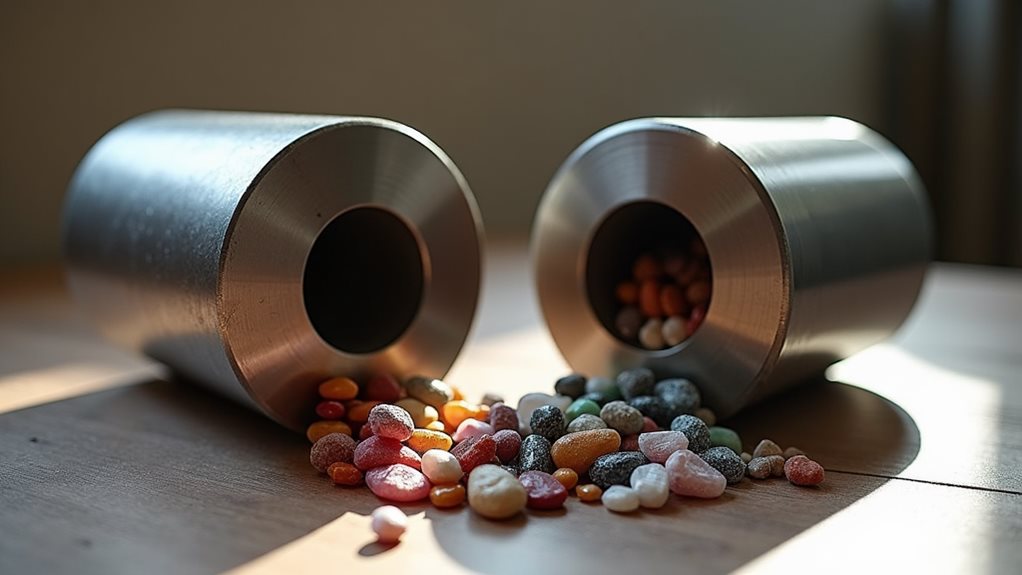
Although both tumbler types require media for operation, you’ll notice striking distinctions in how they consume supplies over time.
When comparing media consumption rates between rotary tumblers and vibratory tumblers, the disparities are quite significant, with vibratory models offering some impressive advantages.
Here’s what you’ll uncover about supply usage:
- Rotary tumblers need up to 30% media for effective burnishing, resulting in higher consumption
- Vibratory tumblers use about 30% less grit and polish, making them more economical
- A hybrid approach, using both types in sequence, can optimize your media usage
While rotary tumblers might seem more affordable initially, you’ll find that vibratory tumblers’ faster processing times (1-2 days versus 4-6 weeks) can lead to substantial savings in media and electricity costs over time.
Best Applications for Each Tumbler Type
When you’re working on rock shaping projects, you’ll find that rotary tumblers are your best choice for transforming rough stones into smooth, rounded stones over a 4-6 week period.
On the other hand, vibratory tumblers excel at maintaining angular shapes and delivering quick polishes in just 1-2 days. If you’re handling fragile materials or pieces with complex details, you’ll want to choose a vibratory tumbler for its gentler action and faster processing time.
For the most efficient results, you might consider using both types: start with a rotary tumbler for the initial rough grinding, then switch to a vibratory tumbler for the final polishing stages, cutting your total processing time to under two weeks.
Rock Shaping Projects
Choosing between rotary and vibratory tumblers for your rock shaping projects depends entirely on your creative vision and timeline.
If you’re looking to create perfectly rounded stones, you’ll want to use a rotary tumbler, while vibratory rock tumblers are your go-to choice for maintaining angular shapes and achieving quick results.
Here’s what you should consider when selecting your tumbler:
- Rotary tumblers are perfect when you’re working with larger stones or need extensive shaping, though they’ll take 4-6 weeks to complete.
- Vibratory tumblers will polish your rocks in just 1-2 days while preserving their natural angles.
- For the absolute best results, you might want to use both – start with rotary for shaping, then switch to vibratory for that final, gorgeous polish.
Delicate Material Processing
Processing delicate materials requires you to carefully consider which tumbler will protect your precious stones while achieving that perfect finish.
If you’re working with fragile or complex pieces, you’ll find that vibratory tumblers are your best choice, as they’ll maintain the original shape while polishing your stones in just a day or two. These tumblers use gentler grit and specialized slurry to prevent chipping, making them perfect for softer materials.
While rotary tumblers excel at handling tougher stones, they’re not ideal when you need to round the rocks without altering their shape significantly.
For the best results with delicate materials, you might want to combine both methods – start with a gentle rotary tumbling for initial shaping, then switch to a vibratory tumbler for that flawless final polish.
Speed vs. Quality Results
The speed distinction between rotary and vibratory tumblers can make or break your rock polishing project’s timeline.
While rotary tumblers deliver superior quality results over their 4-6 week processing period, vibratory tumblers can accomplish similar tasks in just 1-2 days.
To help you choose the right tumbler for your needs, consider these key points:
- Vibratory tumblers work up to twice as fast, perfect for quick polishing jobs
- Rotary tumblers excel at creating beautifully rounded stones and premium finishes
- Combining both types gives you the best of both worlds – use rotary for initial shaping, then switch to vibratory for efficient final polishing
For ideal results, you’ll want to match your tumbler choice to your specific project goals, considering whether speed or ultimate finish quality is your primary concern.
Expert Tips for Optimal Results
When combining the power of rotary and vibratory tumblers, you’ll achieve stunning results that showcase your rocks’ true potential.
Start with a rotary tumbler for the initial shaping process, then switch to a vibratory tumbler to speed up polishing while preserving the stones’ natural form.
For the best outcomes, you’ll want to keep a close eye on your slurry consistency and choose the right tumbling media.
Use pyramid-shaped media during early stages, and don’t forget to add stainless steel shot for that perfect final burnish.
Make sure your rotary tumbler is at least 30% full of media, while your vibratory tumbler might need extra steel shot.
If you’re looking to enhance your technique, check out RockTumbler.com for valuable tips from experienced hobbyists.
Combining Both Tumblers for Maximum Efficiency
By combining your rotary and vibratory tumblers strategically, you’ll slash your rock processing time from six weeks to just two, while achieving superior results.
Your rotary tumbler excels at shaping and rounding stones during the coarse grind phase, while your vibratory tumbler brings out an incredible luster during polishing in just a day or two.
Here’s why this energetic duo works so well:
- Your rotary tumbler creates perfectly rounded stones that are primed for polishing
- The vibratory tumbler uses 30% less time and fewer materials during the polishing phase
- You’ll maintain the beautiful shapes from your rotary tumbler while achieving an exceptional polish in your vibratory unit
This efficient combination not only saves you time but also reduces your costs on supplies like grit and polish.
Frequently Asked Questions
What Type of Rock Tumbler Is Best?
You’ll need to weigh tumbler efficiency, noise level, and cost comparison to choose what’s best. For beginners, start with rotary tumblers. If you’re experienced, vibratory tumblers offer faster results.
What Are the Results of Vibratory Tumblers?
Like a skilled sculptor’s chisel, vibratory tumblers give you quick 1-2 day results with natural angular shapes. You’ll need careful maintenance and supervision, but you’ll save on materials while achieving detailed finishes.
What Is the Best Media for Rock Tumblers?
You’ll get the best results using different tumbler media types matched to your project: ceramic or plastic for delicate work, steel shot for aggressive shaping, and varying grit sizes with polishing compounds.
What Is a Rotary Rock Tumbler Used For?
Like a gentle massage for stones, you’ll use a rotary tumbler to transform rough rocks into gleaming jewels through rock polishing techniques. It’s perfect for gemstone finishing methods with minimal supervision.


